
Criminal Case: Mysteries
Pretty SimpleAdventure
4.64.84K Reviews
- Version
- 2.45.1
- Installs
- 5.00M
- Age Rating
- Teen
Screenshots
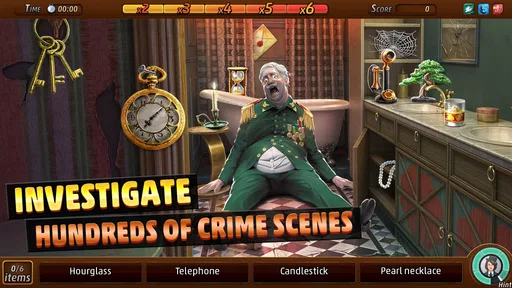
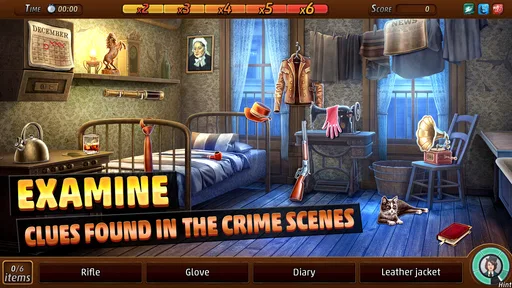

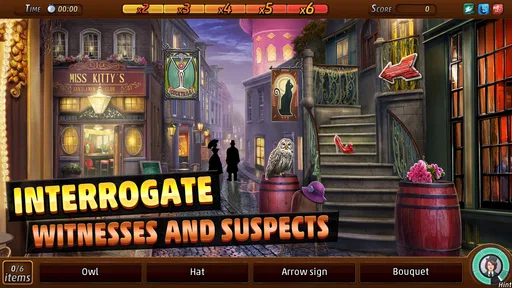
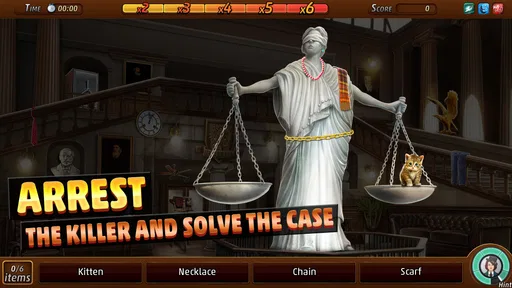
Our Review of Criminal Case: Mysteries
 Analysis by Appyee
I approached Criminal Case: Mysteries of the Past! expecting a light mystery game, but its appeal became clearer after several cases: it is really a repeatable investigation routine wrapped in an adventure format. You visit crime scenes, search for objects, inspect clues, question suspects, and gradually build a case. The individual actions are simple, yet the combination of observation, timing, and story progression gives the game a pleasantly steady rhythm.
That rhythm is the main reason I can recommend it to people who enjoy hidden-object games but want more structure than a collection of disconnected scenes. Pretty Simple has built the experience around familiar detective tasks, while keeping the presentation accessible enough for short sessions. It is free to start, rated Teen, and available for devices running Android 7.0 or later. The current version is 2.45.1, so it is worth checking that your device meets the requirement before downloading.
How the investigation loop feels in everyday play
The basic workflow is easy to understand. A case gives you a crime to investigate, and the game moves you between scenes where you search for listed objects. Finding items earns progress toward the investigation, while the surrounding story gives those searches a reason to matter. Instead of simply clearing one picture after another, I felt as if each scene was part of a larger chain of evidence.
This makes the game particularly suitable for short breaks. I can imagine opening it while waiting for an appointment, completing a scene, and stopping without needing to remember a complicated control scheme. The touch controls are naturally suited to mobile play: tap an object when you spot it, move through the available investigation steps, and follow the prompts as the case develops.
The hidden-object sections are not difficult because of controls. The challenge comes from visual clutter and from the way some objects blend into their surroundings. A small item may be partly concealed by the scenery, share a color with nearby details, or be represented by a word that makes you think of the wrong thing. That gives the search a little more personality than simply scanning for obvious shapes.
I found it useful to separate “looking” from “tapping.” On the first pass through a scene, I scan the larger areas and note anything that resembles an item on the list. Then I return to the corners, shelves, tables, and darker patches. This is more reliable than tapping randomly, especially when the list contains several objects with similar colors. It also reduces the temptation to spend resources correcting careless guesses.
The story is another important part of the baseline experience. The game is not trying to be a realistic police simulator, and I would not play it expecting deep forensic procedure. Its investigations are streamlined, dramatic, and designed to keep the next scene within reach. That simplicity works when I want a mystery I can follow without taking notes, but it may feel shallow if you prefer complex deduction boards or open-ended detective work.
One realistic use case is an evening session with the sound turned down. I can progress through a few investigation steps while relaxing, and the visual clues remain understandable without requiring constant audio attention. The game works best when I treat it as a casual story-driven puzzle rather than a serious crime simulation.
What to check before settling into a routine
The first settings I would inspect are the audio controls. Mystery games often rely on atmosphere, but background music can become repetitive during longer searches. Lowering the music while keeping important effects audible is a practical compromise if you want the scenes to feel active without letting the soundtrack dominate. When I am playing in public, muting the game entirely makes it easier to concentrate on the visual search.
I would also check notification preferences on the device itself. A game built around waiting for energy or progression can become distracting if every reminder interrupts the day. Turning off notifications is sensible for anyone who wants to play only when they choose. On the other hand, players who enjoy returning to an ongoing case may prefer to leave useful reminders enabled. The right choice depends on whether the game is a planned break or a background habit.
Because the title includes optional purchases, I recommend deciding on a spending boundary before beginning. The listed in-app purchase range runs from $0.99 to $99.99 per item. That wide range is a reason to use device-level purchase protections, especially if children or other family members can access the device. I personally prefer treating the free route as the default and viewing paid items as optional convenience rather than part of the core requirement.
That approach changes how the game feels. If I rush every scene and try to remove every delay, the experience becomes more frustrating because the design is clearly built around gradual progress. If I accept that a case may take several visits, the free structure feels more manageable. The game is not at its best when played as if it were a continuously accelerating action title.
The Teen content rating is also worth considering. The theme involves murders and investigations, so this is not a cheerful match-three game with a detective costume. The presentation remains accessible, but the subject matter may not suit younger children or anyone looking for a completely gentle atmosphere. For teenagers and adults who enjoy fictional crime stories, the tone is easier to accept.
Small habits that make searches faster
Experienced play is less about tapping quickly and more about controlling attention. When I enter a scene, I read the entire item list first instead of chasing the first object I notice. That gives me a mental map of colors, shapes, and likely locations. If the list includes something that commonly blends into the background, I save the darker or busier areas for a deliberate second scan.
A useful pattern is to divide the scene into zones. I work from left to right or from top to bottom, checking each area once before moving on. This prevents the familiar problem of scanning the same central table three times while ignoring a narrow edge of the screen. It also makes timed searches feel less chaotic because I always know where my eyes should go next.
I avoid spending a hint immediately after missing an item. Instead, I zoom my attention onto objects that could plausibly match the wording, then inspect the scene again from a different direction. A hint can be helpful when a final object is genuinely hidden, but using one as soon as the search feels uncomfortable removes the small satisfaction that comes from solving the visual problem yourself.
Another effective habit is to pause mentally after each discovery. Rather than tapping through the list without thinking, I use the found object to update my understanding of the scene. If the game asks for several household items, for example, I start checking surfaces and storage areas more carefully. If the list points toward outdoor details, I shift my attention away from the obvious foreground objects.
These are modest improvements, but they matter because the game repeats its investigation pattern. A player who develops a consistent scanning method will usually feel less dependent on random taps and paid assistance. The trade-off is that this method requires patience. Anyone who wants instant answers may find the slower visual discipline unnecessary.
I also recommend stopping when concentration drops. Hidden-object games become much harder when I am tired, not because the scenes change, but because I stop distinguishing background decoration from target objects. A short break is often more useful than repeatedly replaying the same scene with declining attention.
Where the design rewards patience, and where it slows down
The strongest part of the experience is its combination of accessible searching and ongoing case progression. Each scene has a clear purpose, and the adventure framing gives me a reason to care about the next discovery. The game is easy to pick up after a day away, which is valuable for casual players who do not want a large ruleset to relearn.
The main limitation is that the underlying interaction can become repetitive. Searching, collecting clues, and advancing the investigation are satisfying at first, but the same foundation remains in place throughout the experience. Story developments help maintain interest, yet players who need constant mechanical variety may eventually feel that they are performing familiar tasks with a new setting around them.
Progression can also test your patience. Free-to-play adventure games commonly ask players to manage the pace of their sessions, and this title is more enjoyable when you work with that pace rather than fight it. If you expect to complete a long sequence in one uninterrupted sitting, delays and resource limits may feel more noticeable. I would not choose it for a weekend of nonstop gaming.
Compared with a traditional standalone hidden-object game, this one offers more continuity because the scenes are connected to cases and characters. Compared with a narrative adventure built around dialogue choices, it gives you less control over the direction of the investigation. And compared with a serious deduction game, it asks for less reasoning but more visual patience. That middle position is both its strength and its boundary.
The game is also different from a pure puzzle title because the search itself is not the entire reward. The case framework encourages me to continue even after a scene has tested my eyes. If the story does not interest you, the repeated searches may feel like a thin layer around a familiar mechanic. If you enjoy the feeling of gradually clearing a fictional investigation, the structure is much more persuasive.
Advanced limits that are easy to overlook
One subtle trade-off is between speed and accuracy. Tapping rapidly may seem efficient, but it can make the scene harder to read and may lead to mistakes. A deliberate scan is usually the better long-term strategy. This is especially true for players who want to conserve optional help and avoid turning every difficult scene into a purchase decision.
Another limit is attention fatigue. Because the game uses visual detail as its main challenge, long sessions can blur together. I get better results by treating each scene as a focused task, then stepping away after a natural stopping point. The title supports casual repetition, but that does not mean endless repetition stays equally engaging.
Players wondering whether they need an internet connection, how much storage the game uses, or exactly how its energy timing behaves should check the current device store page and in-game notices before committing. Those practical details can vary with updates and device conditions, so I would not make them the deciding factor without checking the latest information for your phone or tablet.
The same advice applies to performance. The minimum operating-system requirement is Android 7.0 or later, but an older compatible device may not feel as comfortable as a newer one during extended play. If your phone commonly struggles with other visually busy games, try the free version first and pay attention to loading, touch response, and battery behavior before considering purchases.
It is also important to understand what the game does not try to be in practice: it is not a free-form investigation where every clue can be interpreted in several ways. The path through a case is guided, and the satisfaction comes from finding the intended objects and following the sequence. That is a good design choice for accessibility, but a poor fit for someone who wants to build theories and test multiple solutions.
Who will enjoy it most
I would recommend this adventure to players who like crime-themed stories, visual searches, and mobile games that can be played in compact sessions. It suits someone who wants a clear objective whenever they open the app, without learning a complicated inventory system or mastering fast reflexes. The free entry point makes it easy to test whether the atmosphere and search mechanics suit you.
It is particularly comfortable for people who enjoy routine. You can develop a search pattern, return to an unfinished case, and make gradual progress without needing to dedicate an entire evening. The game also works for fans of casual mystery television who want a more interactive version of the same broad feeling: discover a scene, notice suspicious details, and move the investigation forward.
I would be more cautious recommending it to players who dislike energy systems, optional purchases, or repeated hidden-object scenes. If you want a one-time purchase with no pacing friction, a premium puzzle adventure may be a better choice. If you want challenging logic, a deduction-focused game will probably provide deeper reasoning. If you want action, this title will feel too calm and methodical.
The audience size suggests that the format has broad appeal: the game holds a 4.6 average from around 119 thousand ratings and has passed 5 million installs. Those figures do not replace personal taste, but they do match my impression that the controls and premise are easy for many mobile players to understand. The important question is whether you enjoy the repeated search loop enough to stay with the cases.
My verdict after settling into its rhythm
Criminal Case: Mysteries of the Past! works because it keeps its promise simple: investigate fictional murders by searching scenes, collecting clues, and following the case forward. I like that I can play it casually, improve through repeatable habits, and still have a story reason to return. The strongest sessions are focused rather than frantic, with careful scanning replacing random tapping.
My advice is to adjust the sound and notifications to match your routine, set a clear purchase boundary, and accept the free pacing before deciding whether the game deserves more of your time. Use zone-by-zone searches, reserve hints for genuinely stubborn objects, and stop when your attention starts to fade. Those habits make the experience calmer and reduce the pressure to rush.
Pretty Simple has created a dependable adventure for people who want mystery flavor without demanding detective-level complexity. It is not the right choice for players seeking deep deduction, constant novelty, or a completely interruption-free premium experience. For everyone else, especially fans of hidden-object investigations played in short bursts, it is an easy game to try and a surprisingly comfortable one to keep in rotation.
At no charge to begin, with a Teen rating and optional purchases, it offers a straightforward way to see whether its cases fit your preferences. I would download it for relaxed investigation sessions, not for intense gaming marathons. Once I treated it as a steady visual mystery rather than a race, its strengths became much clearer.
Verdict
Strengths of Criminal Case: Mysteries
- Short investigation cases are easy to play in quick sessions.
- Distinct crime scenes offer varied hidden-object challenges.
- Clue collection gives each investigation a clear sense of progress.
- The mystery format appeals to fans of casual detective games.
- Regular rewards can help maintain momentum between cases.
Limitations of Criminal Case: Mysteries
- Energy limits may interrupt play when you want longer sessions.
- Some evidence searches can feel repetitive after extended play.
- Later investigations may require patience or repeated attempts.
- The story can feel less engaging if you prefer deeper detective mechanics.
- Optional purchases may become tempting when progress slows.
Other Releases by Pretty Simple
View All
Criminal Case
Adventure4.6

Criminal Case: Save the World!
Adventure4.7

Criminal Case: Pacific Bay
Adventure4.7

Criminal Case: The Conspiracy
Adventure4.7
Similar Picks in This Category
View All
Roblox
Roblox Corporation4.2

Pokémon GO
Niantic, Inc.3.5

Ninja warrior: legend of adven
TOH Games4.6

Ninja Arashi
Black Panther4.6

Eyes - The Horror Game
Fearless Games sp. j.4.5

Critical Action:Gun Strike Ops
FPS Shooter & Action Game4.3
Frequently Asked Questions
What is Criminal Case: Mysteries about?
Criminal Case: Mysteries is a hidden-object investigation game in which you examine crime scenes, search for clues, question suspects, and work through story-driven cases. Each investigation combines object-finding challenges with evidence analysis and short puzzle sections. The game is designed for players who enjoy mystery narratives, detective themes, and casual gameplay that can be completed in relatively short sessions.
Is Criminal Case: Mysteries free to download and play?
The game can generally be downloaded for free on supported Android and iOS devices, but it may include optional in-app purchases. These purchases can provide extra energy, hints, boosts, or other advantages that help you progress faster. You can usually play without spending money, although waiting for energy to refill or repeating scenes may be part of the free experience.
Does the game require an internet connection?
An internet connection may be needed for certain features, including loading advertisements, synchronizing progress, receiving updates, and accessing online services. Some investigation scenes may work temporarily when you are offline, but the complete experience is not guaranteed without connectivity. For the most reliable performance, it is recommended to launch the game while connected to Wi-Fi or mobile data.
Is Criminal Case: Mysteries suitable for children?
The game is aimed at players who are comfortable with fictional crime stories and detective investigations. Although it uses a casual visual style, its cases may involve murders, suspicious characters, forensic clues, and references to criminal activity. Parents should review the age rating and consider whether these themes are appropriate for their child. In-app purchases and advertising should also be checked.
What can I do if the game becomes difficult or progress feels slow?
If you get stuck, carefully inspect every area of the crime scene and use hints only when necessary, since hints and energy may be limited. Replay completed scenes to improve your score and collect additional rewards when the game allows it. Managing energy, completing available tasks, and avoiding unnecessary hint usage can make progress smoother without immediately relying on optional purchases.
Play our best games!


